Tech and Inequality: Widening the Wealth Gap?
advertisement
As technology transforms economies, industries, and everyday experiences, a significant inquiry persists: does innovation exacerbate wealth disparity, or can it serve as a means to bridge the gap? For discerning individuals in positions of influence and financial power, the resolution is not a straightforward affirmation or denial—it resides within concealed technology-driven factors, availability of elite opportunities, and the reassessment of competencies that far exceed the prevalent notion of “technology taking over low-wage positions.”
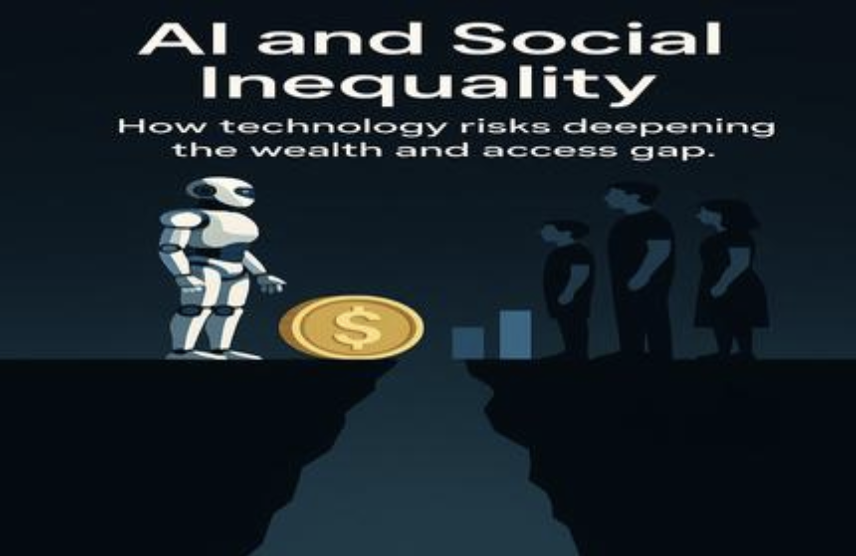
An often-overlooked contributor to the increasing disparities is “skill privilege”—wealthy people gain privileged access to superior tech education and skill enhancement tools. Premium learning platforms powered by AI, tailored guidance from industry leaders, and advance exposure to cutting-edge technologies (such as AI prompt crafting or foundational quantum computing) are frequently inaccessible for those with lower incomes, resulting in a cycle where the rich acquire valuable tech skills while others are left out.
AI Accelerates Wealth Centralization
Artificial intelligence is fast-tracking the concentration of wealth among a select few. In contrast to conventional industries, the tech and AI sectors demand substantial initial investments in infrastructure and talent—assets that are solely available to affluent individuals, organizations, and institutional financiers. Those who possess AI tools, data resources, or technology patents receive passive income from automation, while others depend on labor that is increasingly undervalued due to AI advancements.
Virtual Property: An Emerging Wealth Gap
The emergence of virtual property—such as metaverse real estate, website domain names, and AI-optimized data collections—has led to a new level of inequality. Wealthy investors are acquiring valuable digital assets, which appreciate swiftly as technology becomes more prevalent, while lower-income individuals lack the financial means or understanding to engage. This digital rift reflects real-world economic inequalities but is accelerating at a quicker pace due to rapid technological advancement.

Technological “Filter Bubbles” Restrict Access to Opportunities
Filter bubbles driven by AI are intensifying inequality by curbing access to opportunities. Wealthy individuals have access to technology investment opportunities, exclusive employment options, and upskilling resources through their online connections, while lower-income individuals are exposed to low-quality content that perpetuates stagnation. This unseen barrier ensures that the affluent maintain connections to high-growth opportunities, further widening the economic gap.

Wealthy nations and individuals are pouring resources into national tech infrastructure—local AI-operated data facilities, private satellite communication networks, and exclusive technology ecosystems—securing their competitive advantage. This scenario creates a worldwide divide, with prosperous regions enjoying faster and more reliable technology, while developing areas continue to depend on obsolete systems, hindering their capacity to compete and advance.
Technology Reduces “Human Capital” Value for Low-Wage Workers
Although technology enhances the importance of high-skill, creative professions, it diminishes the worth of low-skill employees. Automation and artificial intelligence take over repetitive tasks, but in contrast to previous industrial changes, there is no evident method for these laborers to improve their skills—particularly when affordable tech training is unavailable. This results in a lasting group of workers whose contributions are no longer financially sustainable, thereby increasing the wealth disparity.
For insightful individuals, the effect of technology on inequality is not predetermined—it is influenced by the manner in which innovation is accessed and distributed. While technology has the capability to increase disparities by centralizing opportunities and resources, it also has the ability to close those gaps—provided that the affluent opt to support inclusive technological education, create open access to digital resources, and implement strategies that guarantee innovation serves everyone.
(Writer:Seli)
Related Articles