Future Healthcare: Predict, Don’t Treat
advertisement
For many years, the focus of healthcare has been on addressing diseases—responding to symptoms, controlling ailments, and fixing harm after it has happened. However, as technology transforms every aspect of health, a significant change is happening: the next era of healthcare is not about mending what is damaged but about forecasting potential issues—well in advance of any symptoms surfacing. For those who can avail themselves of advanced medical care, this change represents more than just a scientific progression; it signifies a complete overhaul in how we safeguard our well-being, turning reactive treatment into anticipatory care, driven by technologies that detect what is invisible to the human eye.
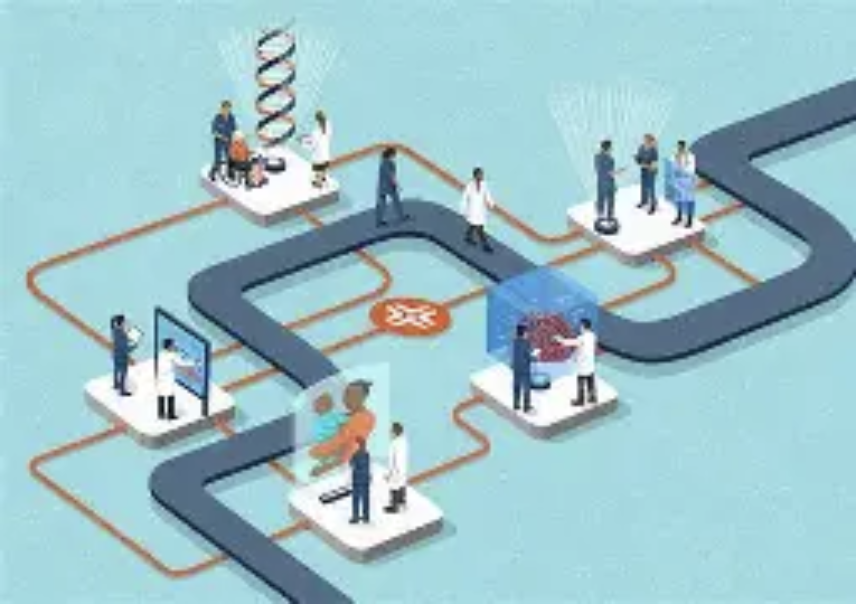
Conventional medicine confines us within a proactive circle: we wait until we experience pain, exhaustion, or other illnesses before we seek medical attention. Predictive healthcare, supported by technology, disrupts this pattern. It leverages detailed biological information—from epigenetic signals to nuanced metabolic changes—to pinpoint risks years ahead of symptom onset, transforming “too late” into “just on time” for necessary action.
Technology Reveals Hidden Health Indicators
The human body produces subtle, unseen signs of future health issues long before we begin to feel ill—but these signs were previously difficult to interpret. Nowadays, cutting-edge technology—like nano-sensor devices and AI-enhanced analysis of metabolites—translates these cues, uncovering concealed risks (such as early cellular deterioration) that standard testing overlooks, even for individuals who appear completely well.

Tailored Predictions Surpass Generic Preventive Measures
General preventive strategies—such as diet, physical activity, and regular health screenings—do not consider individual biological variations. Predictive healthcare employs technology to customize risk evaluations based on a person’s distinct genetic makeup, lifestyle choices, and environmental factors. For affluent individuals, this translates to targeted interventions addressing their particular susceptibilities rather than generic recommendations.
Predictive Technology Changes the Definition of “Wellness” to Proactive Safeguarding
Wellness has evolved beyond merely lacking disease—it now encompasses the proactive prevention of illness. Technology in predictive healthcare, ranging from AI-enhanced health predictions to home-based epigenetic assessments, enables early intervention: modifying habits, initiating targeted treatments, or correcting minor imbalances before they develop into significant health issues, thus maintaining long-term vitality.
Conventional Treatment Squanders Resources on Preventable Diseases
The expenses associated with managing advanced illnesses—from chronic conditions to terminal diseases—are enormous, both financially and psychologically. Predictive healthcare averts this resource drain by intervening before illnesses can establish themselves. For those with financial resources, this is not solely about cost savings; it is about sidestepping the turmoil and suffering linked with avoidable health emergencies.

Predictive Healthcare Functions as an Interconnected Network Rather Than Isolated Instruments
Genuine predictive healthcare is not a singular device—it is a cohesive system: wearables that monitor real-time data, AI that evaluates patterns, and experts who interpret findings into practical steps. In contrast to separate health gadgets, this network fosters a continuous feedback loop, guaranteeing that forecasts are precise and interventions occur at the right moments.
Predictive Care Enables Mastery Over Health Results
The primary strength of predictive healthcare lies in empowerment. It transforms the focus from “let’s cure this” to “let’s avert this,” granting individuals greater influence over their health than traditional medicine ever permitted. For affluent individuals, who prioritize control and strategic planning, this represents the pinnacle of health assurance—technology that enables them to design their wellness trajectories rather than simply responding to them.
(Writer:Frid)
Related Articles